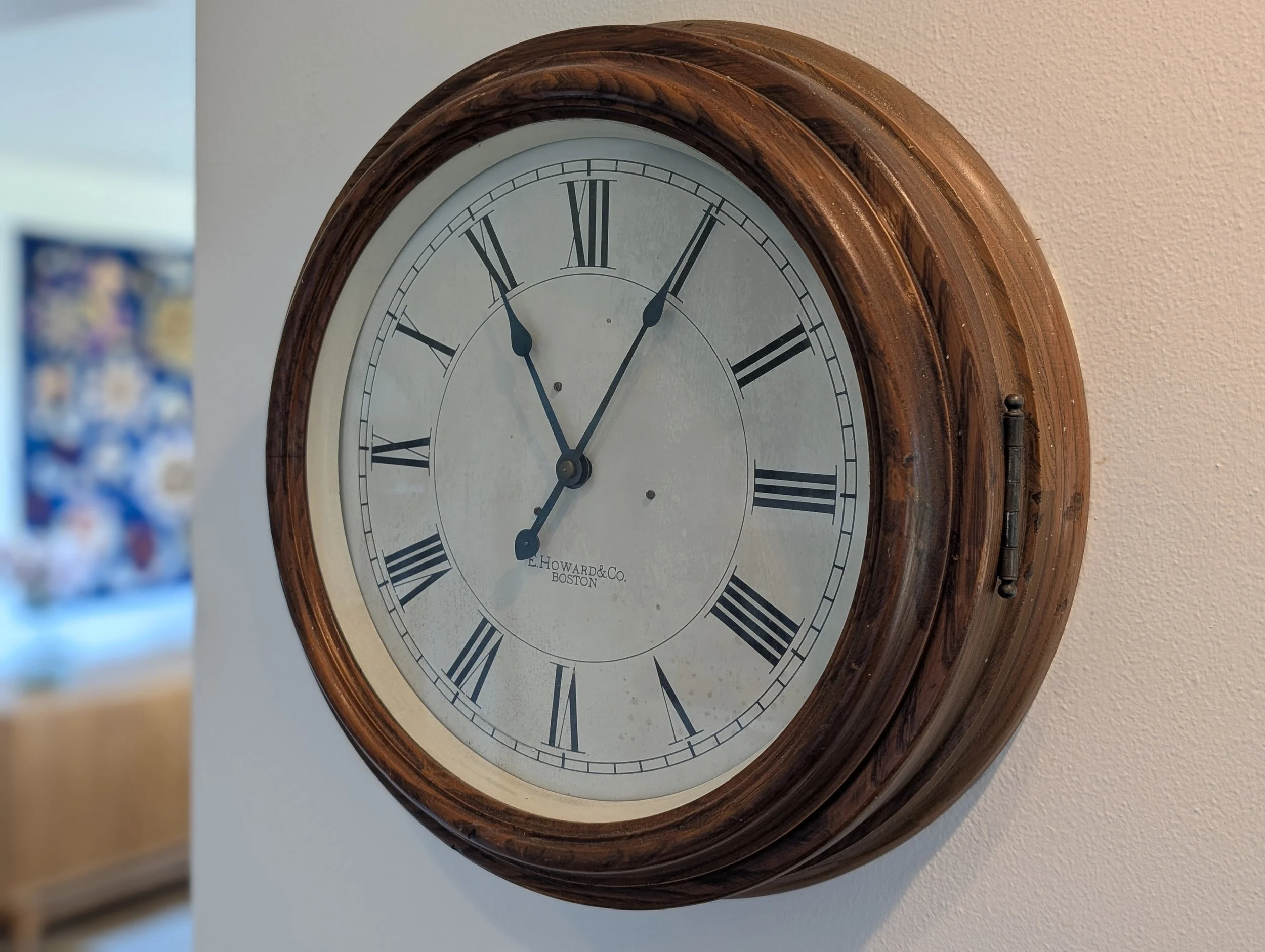
Barnacle started with an E.Howard Slave Clock
Barnacle began with a clock in our kitchen—an E. Howard & Co. Slave Clock, passed down from my father-in-law, a second-generation collector who now restores clocks full-time in retirement.
He modified its movement to run on a simple D battery, creating a version that keeps perfect time without ever needing to be wound. When that battery dies, replacing it becomes urgent—despite the presence of smartphones, smartwatches, and digital clocks everywhere else.
There’s something about an analog clock. The clarity. The presence. The quiet ritual of checking the time.
That curiosity led me deeper into horology and the world of microbrand watches—where thoughtful design, quality materials, and reliable movements take precedence over legacy names.
Barnacle Clock Works was born from that same philosophy: to create clocks that are well-designed, built to last, and simple to live with. Set it, forget it, and let it quietly keep time.
What started as a nights-and-weekends project in a Northern California barn remains a study in craft, function, and enduring design.